About NTLSN · Our story
Built from the edges — for the whole sector.
National Teaching & Learning Sector Network — the open home for connecting university teaching in Australia. Free, independent, open-source. NTLSN, everywhere you work.
Independent · owned by no one · nothing stored, shared or sold.
Our story
It started with Seb’s lived experience as a CALD academic, in which he heard many academics facing isolation due to a siloed approach to professional development by universities. Seb discussed the viability of something sector-wide catering to the SoTL needs of staff in the universities. Building something sector-wide is a challenge as there are no funds. Seb started this conversation with a few other passionate colleagues who believed in open-source, free resources for SoTL — and, being a technically sound academic, built NTLSN.
Once the draft was ready, he started to onboard other passionate academics, like Kashmira, who supported the idea, provided feedback on design, and shared the responsibility of making it visible to the sector. As NTLSN is still in its early stages, Seb and Kashmira are looking to make it more accessible to universities so that resources can be shared sector-wide.
As the very premise of NTLSN is to help reach people who need it without barriers, the network is and will remain free for individuals.
The founder
Associate Professor Seb Dianati
Founder, NTLSN
Academic developer · Scholarship of Teaching & Learning researcher
An academic developer and critical scholar of higher education, and author of The Commercialisation of MOOCs (Springer, 2024) and the forthcoming Who Gets to Partner? Student Partnership as Democratic Praxis in Higher Education (SpringerBriefs in Education). His research spans students-as-partners, Indigenising the curriculum and the digital classroom. He built NTLSN and its 30+ free in-browser tools single-handed — the crash courses, induction kits and recognition supports — so every educator, wherever they work, has what they need.
BSc(MedChem) · BIE(S&T) · GDIBA · MBA · EdD · SFHEA
SFHEAEdDAuthorCentre for Australian Democracy
Chair
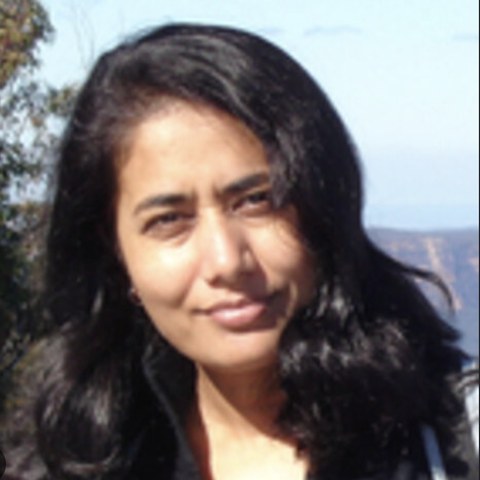
Dr Kashmira Davé
Chair and CALD Lead, NTLSN
Academic developer · Third Space scholar · SoTL Researcher
Senior Lecturer at the University of New England, with over two decades in Australian higher education. Her scholarship spans assessment, technology-enhanced learning and the recognition of Third Space professionals — alongside research on inclusion and bias in academic appointments, students-as-partners and micro-credentials. As Chair she brings the academic-development and sector-partnership depth that keeps NTLSN connected to the communities it serves.
PhD · Senior Lecturer, University of New England · Associate Editor, Australasian Journal of Educational Technology
PhDThird SpaceAJET Associate EditorCAULLTHERDSAUNE
Positionality & motive
I build this as a critical scholar of education — and because I keep watching the same thing happen. A decade of my work has traced how each “transformative” idea in higher education — open educational resources, then MOOCs, then microcredentials, and now partnership itself — arrives promising to democratise, and is then quietly enclosed, domesticated and monetised. The language of transformation stays; the transformation is foreclosed.
I wrote The Commercialisation of MOOCs (Springer, 2024) about that pattern. My new book, Who Gets to Partner? Student Partnership as Democratic Praxis in Higher Education (SpringerBriefs in Education, forthcoming), asks it of partnership: whose interests does it serve, whose knowledge counts, and who is quietly rendered “unpartnerable”?
That question — who gets to partner? — is the premise of this platform. The book asks it of students; NTLSN asks it of all of us: which staff get to partner in shaping teaching and learning, and which are left isolated at the edges? For too long the answer has depended on which institution you belong to, which unit funds your development, whether anyone thinks to invite you in. NTLSN is my attempt at a different answer — to keep the sector’s knowledge a free, open commons and to make partnership in it open to everyone, not gated by budget, title or postcode.
— Seb
Author of The Commercialisation of MOOCs (Springer, 2024) and the forthcoming Who Gets to Partner? (SpringerBriefs in Education); researcher in students-as-partners and Indigenous curriculum; elected (volunteer) board member of the Centre for Australian Democracy. NTLSN grew from that work — a critique of commercialised, enclosed education, made constructive.
“Learning is as much emotive, kinaesthetic and in-presence as it is cognitive — arguably more. It happens where you feel heard, seen and felt. That conviction runs through everything NTLSN builds.”
— Seb. And it’s why this exists: decades of sector funding flowed to consultants and restructures while programs flattened and the people who hold learning together were let go. NTLSN is the counter-investment — putting the sector’s knowledge back in the sector’s hands.
The evidence — what the data shows
1,431
Works in the commons
$0
Cost to students & staff
Every number here is verifiable in the open: the whole commons is browsable now, nothing is behind a login, and nothing you do is stored, shared or sold.
The plan — 2027 and 2028
From a directory to infrastructure the sector can convene on. Several pieces already work as free tools you can try today; the institutional versions need a backend and partner cooperation — we only claim them as they land. The live counts (institutions mapped, verified events) are always on the home page, straight from the open data.
2027 · Symposiums & convening
The bigger build — running things on the navigator, not just finding them.
- Symposium & abstract engine — registration, abstracts and programme. Try it now →
- Peer-Review Exchange — review one, get one reviewed; a national registry. Try it now →
- Pair Review — a focused two-person developmental review of teaching. Try it now →
- Calibration Suite — shared rubrics and cross-marker moderation. Try it now →
- Curriculum Auditor — programme → course → unit outcomes, TELAS-aligned. Try it now →
- Ecosystem APIs & LMS — LTI 1.3 for Moodle, Canvas, Blackboard and D2L, plus an open API. Developers →
- Single sign-on (AAF) — national sign-on via the Australian Access Federation.
2028 · Recognition & sector interoperability
Portable recognition and the connective tissue between institutions — on open standards, no lock-in.
- Teaching Recognition Passport — a portable record of your teaching, via My eQuals. Try it now →
- National recognition framework — awards, citations and certification. Try it now →
- Students-as-Partners Registry — student-partnership work on the national map. Try it now →
- Sector interoperability (MCP) — an open machine interface so any system can read the commons. Live now →
- CRM & student-system integration — PeopleSoft, CourseLoop and the wider stack.
- WCAG 2.2 AA / VPAT — accessibility conformance for procurement.
- AI-assisted alignment — optional, model-agnostic curriculum suggestions; you decide.
Steering committee
Dr Kashmira Davé
Chair · CALD Lead
University of New England
Youcef Sai
Steering Committee
La Trobe University
Zablon Pingo
Steering Committee
Charles Darwin University
Grant Andrews
Steering Committee
Central Queensland University
A steering committee of colleagues who chose to build this together. Seb Dianati is the founder; the committee guides and grows the commons.
What NTLSN is
A free commons
Every event, resource, framework and recognition pathway across the sector — free, no logins, no paywalls.
We hold nothing
No data is stored, shared or sold. Public information is read in your browser and never leaves it.
Independent & open
Open-source, vendor-neutral and unaffiliated. Owned by no university and no company.
Built by the sector
Made by the people it serves — educators, for educators, across all Australian universities.
Acknowledgement of Country
Acknowledgement of Country
NTLSN acknowledges the Traditional Owners and Custodians of Country throughout Australia, and their enduring connection to land, waters and community. We pay our respects to Elders past and present, and to all Aboriginal and Torres Strait Islander peoples. Sovereignty was never ceded — always was, always will be, Aboriginal land.
Only a Traditional Owner can give a Welcome to Country; anyone can — and should — give an Acknowledgement of Country. First Nations crisis support: 13YARN — 13 92 76.
← Back to NTLSN
◇ AI field guide — count the em-dashes on this page (—). The machine can’t resist them; every one is a small tell. You just ran your first detector — by hand.